
Introduction: From Emperor’s Taste to Mass Appeal
When you think of black tea, what comes to mind? Is it a steaming cup of English afternoon tea, a sweet and creamy milk tea, or perhaps those iconic cans labeled “Zhongshan Small-Kind” or “Jinjunmei”? The story of black tea is far richer than you might imagine—it begins as an imperial court favorite in China and evolves into a global phenomenon. This journey all started with a pivotal decision made by a Chinese emperor during the Ming Dynasty.
Emperor Zhu Yuanzhang: Simplifying Tea Rituals and Revolutionizing Loose Tea
Before the Ming Dynasty, Chinese tea culture was steeped in elaborate rituals, especially during the Song Dynasty, where matcha and powdered tea dominated. The process involved grinding tea leaves into a fine powder, whisking it with hot water, and savoring it in a highly formalized manner. These practices were not only time-consuming but also reserved primarily for aristocrats and high-ranking officials.
Enter Emperor Zhu Yuanzhang, the founder of the Ming Dynasty—a man of humble beginnings who disliked the opulence and complexity of traditional tea ceremonies. He believed tea should be accessible and simple, reflecting a philosophy of frugality and equality. In 1398, he made a bold decision: he abolished the intricate and wasteful powdered tea rituals and promoted loose tea (loose-leaf tea) as the standard for consumption. This shift marked the beginning of modern tea culture in China.
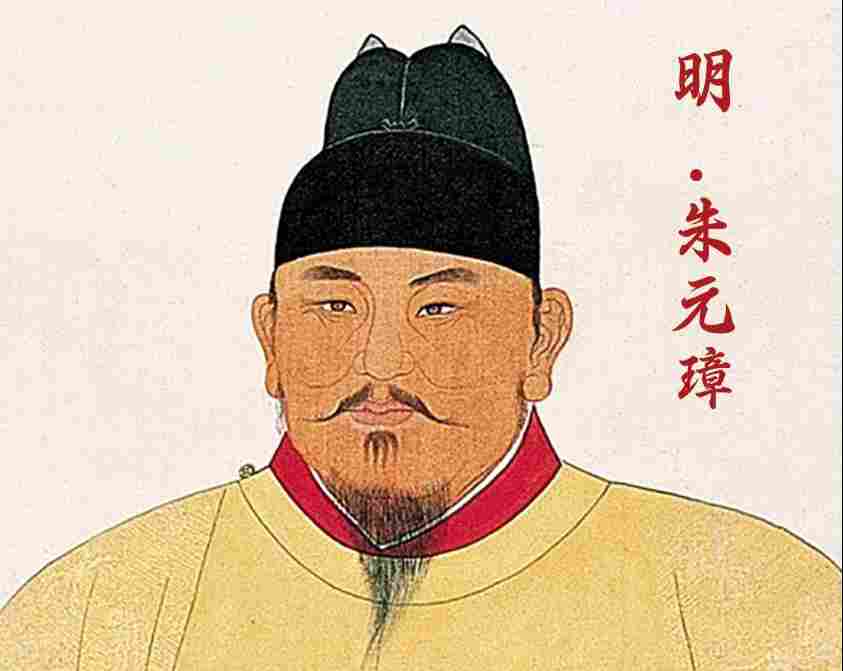
Zhu Yuanzhang, the founding emperor of the Ming Dynasty
The Unlikely Discovery of Black tea
While green tea dominated Chinese tea production for centuries, black tea’s origins are tied to an unexpected discovery during the Ming Dynasty in Fujian Province. Legend has it that local farmers accidentally dried fresh tea leaves while working in the sun. To their surprise, the leaves transformed into a deep crimson color and developed a rich, robust flavor with a distinctive smoky aroma. This serendipitous creation became known as “black tea”, and it quickly gained recognition as a rare delicacy.
Among these early black teas, “Zhongshan Small-Kind” emerged as the most celebrated variety. Renowned for its bold, full-bodied flavor and distinctive pine smoke notes, it became a favorite among imperial courts and high society during the Ming and Qing dynasties. By the Qing Dynasty, Fujian black tea had become one of China’s primary export commodities.
The British Imperial Connection
The global spread of black tea owes much to British colonialism and its love affair with Chinese tea. In the 17th century, Dutch traders introduced Chinese black tea to Europe, where it quickly became a luxury item among aristocrats. By the 18th century, English afternoon tea had emerged as a quintessential upper-class tradition, featuring black tea paired with finger sandwiches, scones, and pastries.
The British royal family played a significant role in popularizing black tea. Queen Victoria, for instance, was known to host elaborate tea ceremonies at Buckingham Palace. However, the British demand for Chinese tea also led to conflict. By the 19th century, the East India Company, eager to reverse trade deficits, resorted to opium smuggling into China. This tension culminated in the Opium Wars, which reshaped Sino-British relations and accelerated the global dissemination of black tea.
The British Shift to India and Sri Lanka
By the late 19th century, the British Empire sought to reduce its reliance on Chinese tea and began cultivating tea in its colonies. They discovered that the Assam region in India and the highlands of Sri Lanka were ideal for growing tea bushes. With expertise provided by Chinese tea masters, the British established vast tea plantations and developed new production techniques tailored to European tastes.
British colonists found that Indian and Ceylon teas (as teas from Sri Lanka were then called) produced bold, robust flavors that paired perfectly with milk and sugar—a pairing that became synonymous with English tea culture. Over time, Assam tea and Ceylon tea surpassed Chinese black tea in global production and popularity, solidifying their place as the world’s leading black tea producers.
Yet, Chinese black tea never disappeared. Today, high-quality varieties like “Zhongshan Small-Kind” and “Jinjunmei” remain highly prized by tea connoisseurs around the globe.
The Globalization of black tea
From its origins in Ming Dynasty China to its modern-day ubiquity, black tea has traveled a remarkable journey spanning centuries and continents. It has bridged cultural divides, becoming a staple not only in English afternoon tea but also in contemporary beverages like milk tea andbubble tea.
In today’s world, black tea has transcended its traditional roots. It is the backbone of countless milk tea drinks—ranging from classic “Ruby Red” to trendy “Milk Foam black tea.” As health-conscious consumers seek alternatives to high-sugar sodas and caffeinated beverages like coffee, black tea offers a milder, more natural option. Modern innovations include fruity infusions, honey-sweetened blends, and evenRTD (ready-to-drink) black tea beverages.
Conclusion: From Imperial Courts to Everyday Life
From Emperor Zhu Yuanzhang’s simplification of tea rituals in 1398 to its modern-day role in global tea culture, black tea has truly come a long way. It journeyed from the mountains of Fujian to imperial courts and then to the world stage—a testament to its enduring appeal.
Yet, despite all its travels, black tea remains deeply rooted in Chinese imperial traditions. As it continues to evolve with modern tastes and innovations, one thing is certain: the story of black tea is far from over. Whether enjoyed as a simple cup of tea or as part of a creative new drink, black tea’s charm endures. Its legacy—a fusion of tradition and innovation—ensures that this ancient brew will continue to captivate tea lovers for generations to come.